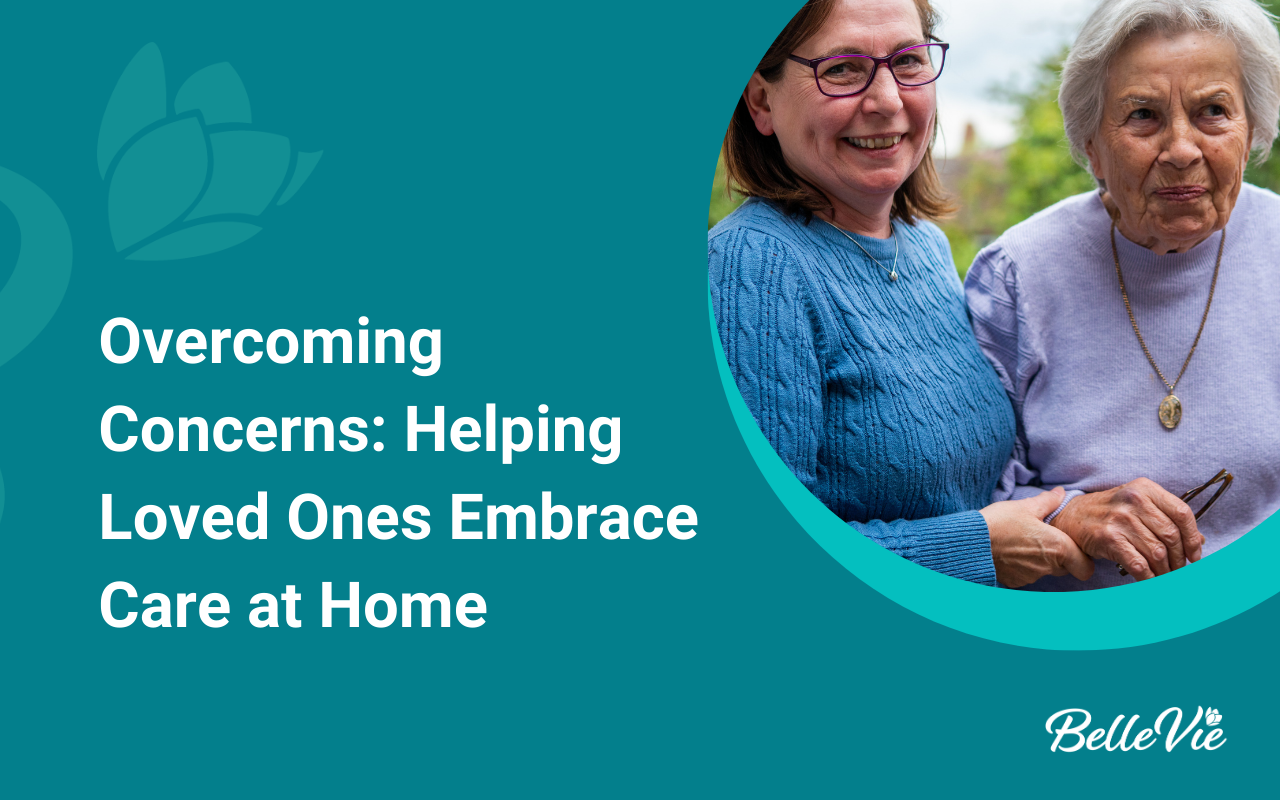
Overcoming Concerns: Helping Loved Ones Embrace Care at Home
The most common statement we hear at BelleVie when talking to families seeking support for a loved one is, “They’re really against having any care, but I know it's really got to the point where they need it.”
What to do next?
It’s a tough situation, and, in fairness, a normal reaction. Who would want someone they’ve never met to come into their home and be part of the intricacies of their private life?
Our advice is to start small and start sooner than perhaps you need, allowing mutual trust and a relationship to grow out of respect and common ground between the person receiving and given support. .
Here at BelleVie, we purposely keep our teams small and only ever recruit from the community we work in, which means there’s no language barrier, and you’ll likely see the same familiar, friendly faces. This allows us to get closer to you and your loved one. This is the first step towards a trusted relationship.
We do everything we can to fit seamlessly into your family. We don’t wear uniforms so we don’t stick out, and we don’t call ourselves Carers, we like to think of ourselves as Wellbeing Support Workers.

Reframing the Narrative
There’s an outdated thought that home care is for people who can’t manage or risk hurting themselves if they are not supported.
It’s completely understandable to have concerns about transitioning to home care, especially if you’re used to thinking of it as something only for people who can’t manage on their own or who might be at risk of harm without support. This outdated perspective doesn't reflect the reality of modern home care. Today, home care is designed to support people in a way that enhances their independence and helps them live their best life in their own homes. It’s not about being unable to manage; rather, it’s about providing you with the support you need to thrive and achieve your personal goals.
Our approach focuses on your unique needs and preferences, ensuring that the care you receive is tailored to you, not just a generic service. We’re here to make this transition as smooth and positive as possible, and we're committed to addressing any concerns you might have along the way.
In one example, BelleVie’s Oxfordshire team supported a lady in the early stages of dementia.
Independent and living alone, she was determined to stay at home, yet it was clear that she needed help in order to do this. Her main objection was the idea of strangers in her home.
To tackle her concerns, our team designed a roster with a few staff members. This way, she could build familiarity and develop trust as Wellbeing Support Workers visited daily to help cook meals, support her in eating, and even drive her to visit friends. Over time she was able to see the benefits of this ‘light’ support in enabling her to keep doing the things that she loved and of course to ultimately stay living at home.
Thanks to BelleVie’s communication through the Family Connect App, emails, and phone calls, her loved ones were always aware of her well-being, and necessary family decisions were made quickly and efficiently.
Understand Apprehensions
The fact is that nobody really wants care at home. It often signals the first sign of ‘not being able to cope’ and with it comes stigma and apprehensions, that unless you’re in that situation, can be hard to comprehend.
Concerns inevitably arise when faced with a change in life, so the trick is to be open about those personal concerns as a family and with your loved one.
We asked Emma, our Oxfordshire BelleVie Wellbeing Lead, about the most common worries she hears when talking to older adults and families about home care.
“What I find is that people feel very resistant about having ‘a stranger’ in their house, which is fair enough! There are also fears that they’ll lose control of their life—a loss of independence if you like.”
Thanks to Emma’s lead, here are some topic areas to help you grasp common apprehensions:
Loss of Independence
Loss of independence comes as a blow to pride and self-worth. Yet control is in the individual’s hands at all times. We ensure that the person receiving support is very much a part of creating the plan they want at all times. Which is why in our ‘initial chat’ we ensure they are always present. Of course there are times where that interaction is not possible and in that case we listen to the family to understand who that person is and what they like. These likes and dislikes are built into our care plans.
Anxiousness about a stranger in the house
Anxiousness about a stranger in the house, particularly for those who live alone, is common. It helps to know that all our colleagues are certified, trained, and genuinely friendly people from your community, who enjoy being helpful. We try to ensure that there is plenty of time to get to know each other.
Social Pressure
Social pressure can reveal a sense of shame that neighbours will know, even though an estimated 1 million British people have at-home services—maybe some of the neighbours already have at-home support! We keep things low key. No uniforms and highly confidential at all times.
When a family manages care
When a family manages care, strains can appear. If care needs increase or if the family needs to pull back, everyone can feel a mix of pressure and guilt. Highlighting that with outside help, there can be more quality family time, or simply being a daughter or a son, not a carer, can be invaluable.
Affordability
Affordability comes up as well, even if there are sufficient funds for it. New expenses can stir anxiousness in anyone. Here at BelleVie, we work on a simple fixed monthly membership, with no extra charges for holidays, weekends, or even if we need to stay a little longer one day if things are a bit slower, so nasty surprises at invoice time.
Supporting an Apprehensive Loved One
Being aware of common concerns can help you reframe the conversation and navigate what can be an emotionally challenging discussion.
If conversations seem to stall or hit a dead end, consider adjusting your approach. There are strategies you can use to ease the process, such as revisiting the conversation with empathy, focusing on the benefits, and ensuring open, supportive communication.
Expect it to be a series of conversations. Aim to be empathetic and not frustrated if someone is avoidant at first. You’ll likely revisit the conversation multiple times before moving to an actionable plan.
Active Listening. Sometimes we assume we know what someone else feels. Instead, ask open-ended questions that allow someone time to verbally explore and share their thoughts. Avoid jumping in with what you think their concerns are.
Focus on benefits, not the care action itself. For example, help them imagine the relief from less arthritic pain when someone else hangs the laundry, sweeps the front steps, or carries the groceries home.
For the social souls. Remind them how much they love a good laugh. Talk about how every relationship takes time to develop. Before they know it, they’ll wonder how they did without the companionship of a friendly carer.
Family acceptance of a Wellbeing Support Worker. Remind them that the extra hands will benefit the whole family. That a Carer will take chores away, and sometimes pressure, from the family to ensure medications are managed, and preparing good meals. This is particularly comforting for families who don’t live close by.
The move to consider care is a delicate stage and a personal experience with many practicalities and emotions to consider.
When having family discussions, it helps to remember there are many options depending on needs. We always start any new relationship with an informal chat with family, friends and the person needing support. It's low key, often over a cuppa and a chance to simply meet and chat. Then we take it from there, just like any other relationship!
The move to consider care is a delicate stage and a personal experience with many practicalities and emotions to consider.
When having family discussions, it helps to remember there are many options depending on needs. We always start any new relationship with an informal chat with family, friends and the person needing support. It's low key, often over a cuppa and a chance to simply meet and chat. Then we take it from there, just like any other relationship!
Starting Small
To accept help can spur a sense of loss, particularly for people who have been highly independent all their working lives and into retirement. However, help at home can empower someone to stay in their cherished home for longer, which is ultimately where most of us would rather be.
Companionship calls and light cleaning are great ways to introduce the concept of care without overtly being ‘care’ , and there are plenty of benefits to having someone to share your day with:
Having a Chat
Humans are hardwired to connect, and, as families grow up and neighbours move away, social opportunities can become less frequent.
With a Wellbeing Support Worker, your loved one can enjoy the social aspect of their visits— a good chat while they do the boring stuff, like the dishes or tidying up and for us a chance to just ‘check in’ and make sure everything looks ok.
Family Reassurance
If forgetfulness is setting in, families are comforted that a friendly companion will be there to share time with their loved one while also ensuring scheduled medications are taken and nutritious meals are prepared.
Back in the Community
A chance to have a companion to go to the shops, to the theatre, or to visit the latest museum exhibition, or just a walk to the local park can be just what's needed to break up a long day.
If getting safely out and about is no longer an option then a drop in for a cup of tea, some home baking or just to catch up on the news are options to ensure that isolation doesn’t set in.
Connect Digitally for Real-Time Updates
Giving our families peace of mind is our top priority. We have our own “Family Connect App”, designed for clear communication and transparency on all aspects of support between us and you.
The App holds the team’s notes, wellness updates, a group chat option, and direct communication with the Wellbeing Support Worker. So no matter where you are you can feel connected with us and your loved one. She praised our team and now includes our services as a regular part of her life.
Final Thoughts
Choosing to introduce home care for a loved one is never easy, but it can be a transformative decision that enhances their quality of life and yours. By starting small and fostering trust, you can make this transition smoother and more positive. At BelleVie, we understand the emotional and practical challenges involved, and we’re committed to providing personalised, compassionate care that respects your loved one's independence and dignity.
Our approach is about more than just meeting care needs; it’s about building relationships and supporting families through open communication and genuine connection. Whether it’s through our small, community-based teams, our focus on personalised care plans, or our innovative Family Connect App, we’re here to ensure that your loved one receives the best possible care while you gain peace of mind. Ultimately, home care isn’t about losing independence—it’s about empowering your loved one to continue living the life they love, with the support they need to thrive.


